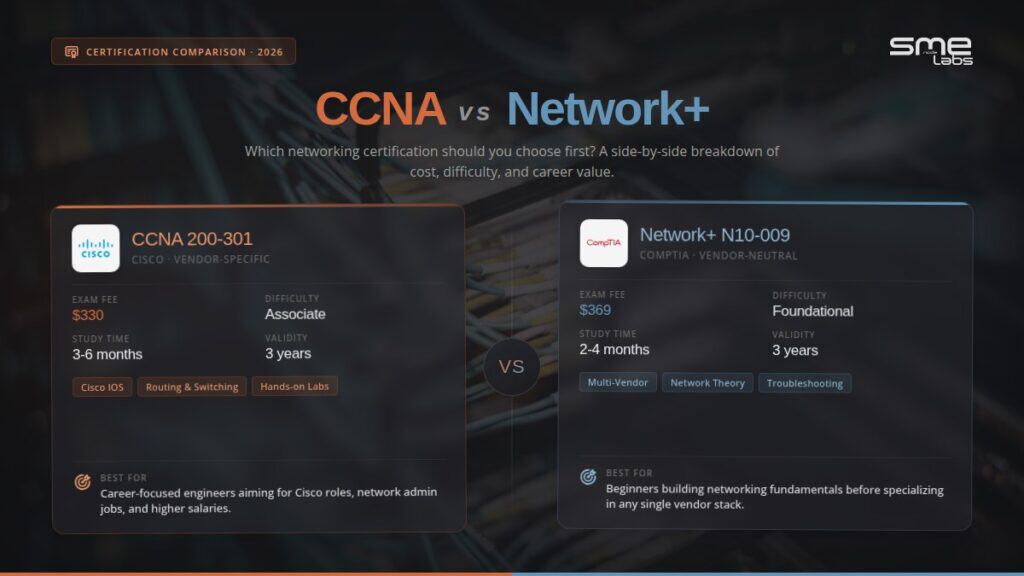
Fortinet NSE4 vs Cisco, which network security certification actually makes sense for you? Short answer: if you’re working with FortiGate firewalls or planning to, go NSE4. If you want broad network security fundamentals and a globally recognised brand, Cisco’s your pick. On the Cisco side, most firewall work now runs on Cisco Secure Firewall (Threat Defense).
That’s the quick version.
But here’s the thing. The choice isn’t really about which cert is “better.” It’s about which one matches your career goals, your current job, and the direction you want to go. And the differences between them are bigger than most people think. If you hold an older FCP credential, here’s what changed in Fortinet’s certification program in 2026.
In 2026, the security job market is strong. Per the US Bureau of Labor Statistics, employment for information security analysts is projected to grow 21% from 2025 to 2035, well ahead of the average for all occupations, with a median wage of $129,180 (May 2025). Source: BLS Occupational Outlook Handbook
So both certs will get you somewhere. The question is where. The choice comes down to five things: whether you already work with FortiGate, how broad you want your career to be, your budget, the salary ceiling you’re aiming at, and who employs you. Let’s break them down.
Fortinet NSE4 vs Cisco: Quick Side-by-Side
Before we get into the details, here’s the big picture. This table gives you the comparison at a glance.
| Feature | Fortinet NSE4 | Cisco CCNA / CCNP Security |
|---|---|---|
| Focus Area | FortiGate firewall management | Broad network security fundamentals |
| Vendor Scope | Fortinet-specific | Vendor-neutral concepts + Cisco tools |
| Exam Difficulty | Moderate (product-focused) | Moderate to hard (theory + hands-on) |
| Exam Cost | $200 (one exam) | $300 (CCNA) / $400 (CCNP Security core) plus one concentration exam |
| Study Time | 2-3 months | 3-6 months (CCNA) / 6-12 months (CCNP) |
| Job Market Demand | High (Fortinet-heavy orgs) | Very high (global recognition) |
| Typical Salary Range | No reliable data (varies by role) | $112K (CCNA) to $168K (CCNP Security), averages |
| Best For | Firewall engineers, SOC analysts | Network engineers, security generalists |
| Lab Requirements | FortiGate access needed | Cisco lab or simulator access |
| Renewal | Every 2 years | Every 3 years (CE credits) |
Cisco figures are averages: PayScale for the CCNA and Skillsoft’s IT Skills and Salary Survey for CCNP Security, as quoted in our CCNA salary guide and CCIE Security salary guide. We couldn’t find a reliable salary figure for NSE 4 holders as a group. Pay tracks the role (firewall engineer, SOC analyst) more than the certificate, and it varies by region, employer and experience.
Pretty clear, right? But numbers only tell half the story. Let’s dig into what actually matters when choosing between the two.
Why a Firewall Certification Matters More Than Ever
Organisations are having real trouble filling security roles right now, and firewall skills are one of the hardest gaps to close. A firewall certification, whether it’s NSE4 or Cisco security, puts you right where companies are desperate for help.
Firewalls aren’t just about blocking traffic anymore. Modern firewall work covers next-gen firewalls, SD-WAN, zero trust, SSL inspection, and threat intelligence. Both Fortinet and Cisco have evolved their firewall certification tracks to reflect this.
Big difference though.
Fortinet is the top vendor for firewall shipments globally, with more than 50% of the market by unit shipments, per 650 Group data cited in Fortinet’s own investor materials. FortiGate’s security fabric is everywhere, from SMBs to large enterprises. So if you’re already touching FortiGate in your day job, NSE4 is the natural move.
Cisco, on the other hand, brings broader recognition. Their security certification track covers everything from security fundamentals through CCIE-level expertise. You’re not just learning one product. You’re learning security architecture.
Make sense so far?
Fortinet NSE4 vs Cisco: Exam Breakdown
This is where the differences get real. The exam formats, topics, and difficulty levels are quite different. Let’s compare them side by side.
NSE4 Exam Format and Topics
The NSE4 exam (FortiOS 7.6 Administrator) tests your ability to configure and manage FortiGate devices. Think firewall policies, VPN setup, web filtering, application control, and FortiGate HA clusters.
It’s very hands-on and product-specific. You’ll need to know the FortiOS interface inside and out. The exam difficulty is moderate, but only if you’ve actually worked with FortiGate. Without hands-on lab experience, it gets tough fast.
The exam fee is $200 per attempt, one exam, with 50 to 55 questions in about 80 to 90 minutes. Fortinet’s fee notice moves it to $210 from 2 November 2026. Most people report 2-3 months of study if they already have basic network security knowledge.
Not bad at all.
Cisco CCNA and CCNP Security Exam Format
Cisco’s path starts with the CCNA (200-301), which covers security fundamentals. From there, you move into the CCNP Security track with specialised exams covering Cisco Secure Firewall, ISE, SASE, and more.
The exam difficulty ramps up significantly at the CCNP level. You’re dealing with both theory and implementation across multiple Cisco platforms. The CCNA alone takes most people 3-6 months of serious study.
Cisco updated the CCNP Security core exam on 2026-08-27. SCOR v2.0 replaced v1.1, and passes on v1.1 still count toward the certification. CCNP Security needs that core exam plus one concentration exam. The firewall concentration, SNCF (300-710), stays: a 90-minute exam on Cisco Secure Firewall and Secure Firewall Management Center, weighted 30% deployment, 30% configuration, 25% management and troubleshooting and 15% integration. If you want the closest Cisco match to what NSE4 tests, that’s the one.
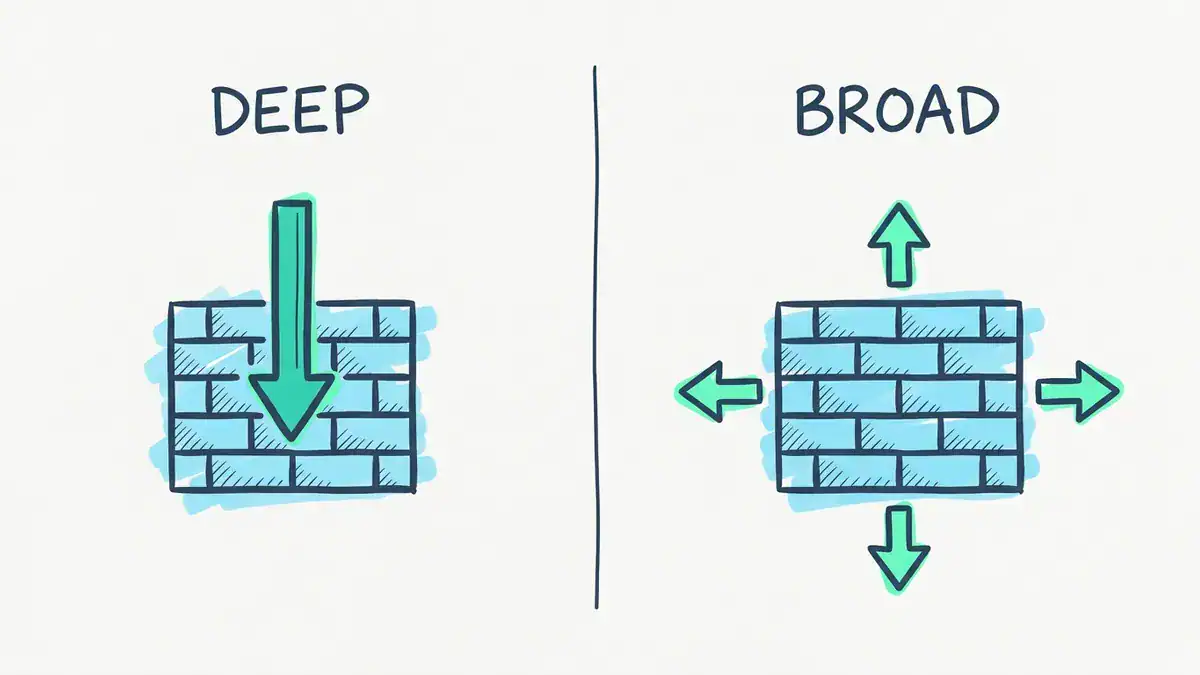
From an exam perspective, Cisco requires a broader knowledge base. NSE4 goes deeper on one product. Different approaches, different strengths.
Fortinet NSE4 vs Cisco Cost Breakdown
Let’s talk certification cost. Money matters, and the price difference is worth knowing.
| Cost Element | Fortinet NSE4 | Cisco (CCNA + CCNP Sec) |
|---|---|---|
| Exam Fee | $200 (one exam) | $300 (CCNA) + $400 (CCNP core) + $300 (SNCF concentration) |
| Study Materials | $40-$80 (practice exams; Fortinet’s self-paced training is free) | $300-$800 |
| Lab Access | $100-$250 (on-demand labs) | $0-$500 (CML/EVE-NG) |
| Total Estimate | $340-$530 | $1,300-$2,300 |
The cost gap is real. At self-study prices NSE4 is the more budget-friendly option, and the NSE4 rows above come from our own cost guide. The Cisco study and lab rows are estimates. But remember, Cisco’s broader scope means more job opportunities down the road. It’s an investment, not just an expense. Here’s what the NSE 4 exam actually costs in 2026, including training and retakes.
For the hands-on side, the FortiGate NSE4 Lab Workbook pairs FortiGate labs with a full EVE-NG topology, so you get the practice reps without paying for a live bootcamp seat.
Fortinet NSE4 vs Cisco: Which Pays More?
Here’s what the numbers actually show. The salary comparison might surprise you.
| Certification | Average pay | Source |
|---|---|---|
| NSE4 | No reliable figure found | Pay tracks the role more than the certificate |
| CCNA | $112K | PayScale, in our CCNA salary guide |
| CCNP Security | $168K | Skillsoft IT Skills and Salary Survey, in our CCIE Security guide |
| CCIE Security | About $177K (top performers $220K+) | Glassdoor, in our CCIE Security guide |
These are averages, not promises. Actual pay depends heavily on region, employer and years of hands-on experience. For the expert end of the Cisco track, see our CCIE Security salary guide.
Look at the numbers. Cisco certs generally lead to higher salaries long-term, especially at the CCNP and CCIE levels. But NSE4 has a lower entry barrier, and FortiGate deployments are everywhere.
Certification tends to translate into a pay bump fairly quickly for a lot of people. Whichever you choose, either cert bumps your earning potential. Worth it.
Fortinet NSE4 vs Cisco Job Market Reality
Five years ago, Cisco dominated every job listing. Now, plenty of mid-market companies and MSSPs run FortiGate, so Fortinet skills get asked for.
Here’s the breakdown:
Fortinet NSE4 jobs: firewall engineer, SOC analyst, network security engineer (Fortinet-focused), security consultant.
Cisco security jobs: network security engineer, security architect, infrastructure security lead, penetration tester.
The security career path you’re building matters more than the vendor name on your cert. But if we’re being real, Cisco still opens more doors globally. Fortinet opens very specific, well-paying doors.
Which Network Security Certification Fits Your Goals?
You’ve probably been going back and forth on this. Totally normal. The choice really comes down to your current situation and where you want to be in 2-3 years.
Ask yourself these questions:
Are you already working with FortiGate firewalls? Go NSE4 first. Validate what you already do.
Do you want the broadest possible security career path? Start with the CCNA Workbook, then build toward CCNP Security.
Planning to specialise in firewall engineering? NSE4 gives you an edge in that niche.
Want the highest salary ceiling? The Cisco track leading to CCIE Security has the biggest long-term payoff.
Think of it like choosing between a sports car and an SUV. The sports car (NSE4) is fast and specialised, perfect for specific terrain. The SUV (Cisco) handles everything and takes you more places. Depends where you’re driving.
Mapping Your Security Career Path
The smartest move? Get both. Seriously. Many senior security engineers hold certifications from multiple vendors. Your path doesn’t have to be either/or.
Here’s a realistic roadmap:
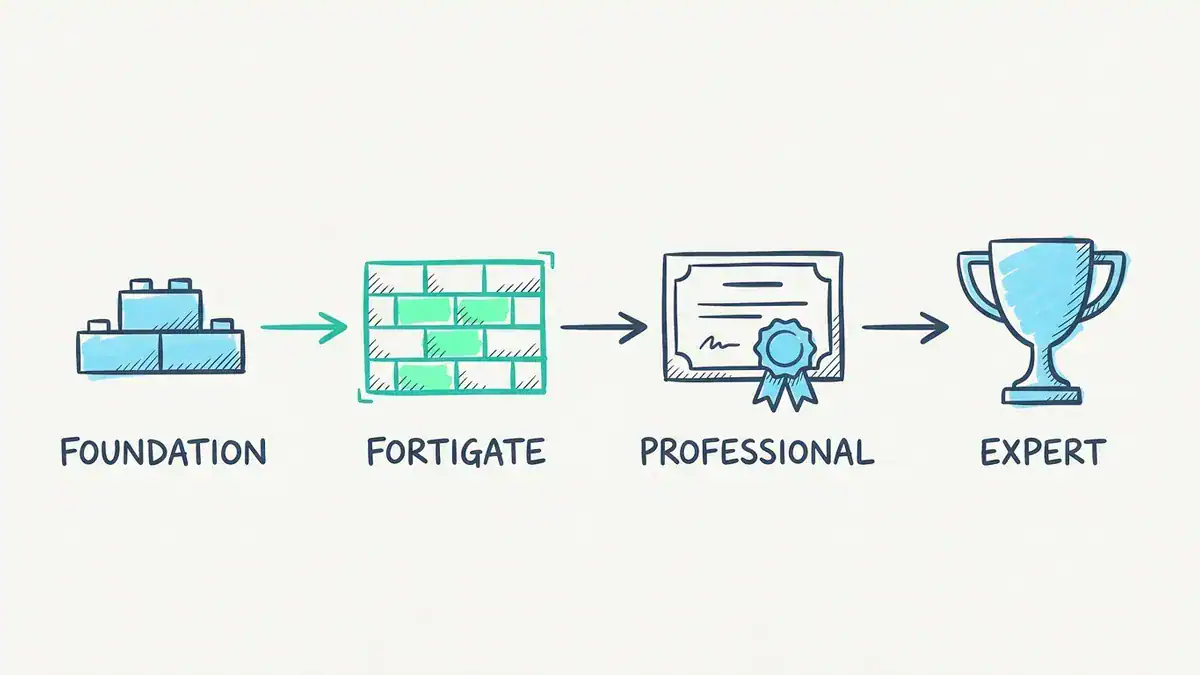
Year 1: Start with CCNA to build your foundation in security concepts. This gives you the fundamentals that apply everywhere. Cisco is replacing CCNA 200-301 v1.1 with v2.0, with the first test day reported as 2027-02-03, so check which version your study guide covers. We broke down the changes in CCNA v2.0 Now Tests Agentic AI.
Year 1-2: Add NSE4 if your job involves Fortinet gear. This makes you immediately more valuable at your current company.
Year 2-3: Move to CCNP Security for the broader track: the SCOR core exam plus a concentration such as SNCF for firewalls. Your salary comparison will look very different with both certs on your resume.
Year 3+: Consider CCIE Security for the top-tier salary bracket. CCIE Security averages about $177K (Glassdoor), with top performers above $220K.
The CCIE Security Workbook covers that path end to end if you’re aiming that far.
So, Fortinet NSE4 vs Cisco, Which Should You Pick?
Bottom line. The decision comes down to the five factors above. Here’s your decision framework.
| If You… | Choose This | Why |
|---|---|---|
| Work with FortiGate daily | NSE4 First | Validate current skills fast |
| Want max career flexibility | Cisco (CCNA to CCNP) | Broadest industry recognition |
| Have a tight budget | NSE4 | Lower total certification cost |
| Targeting $150K+ salary | Cisco (CCNP to CCIE) | Highest long-term salary ceiling |
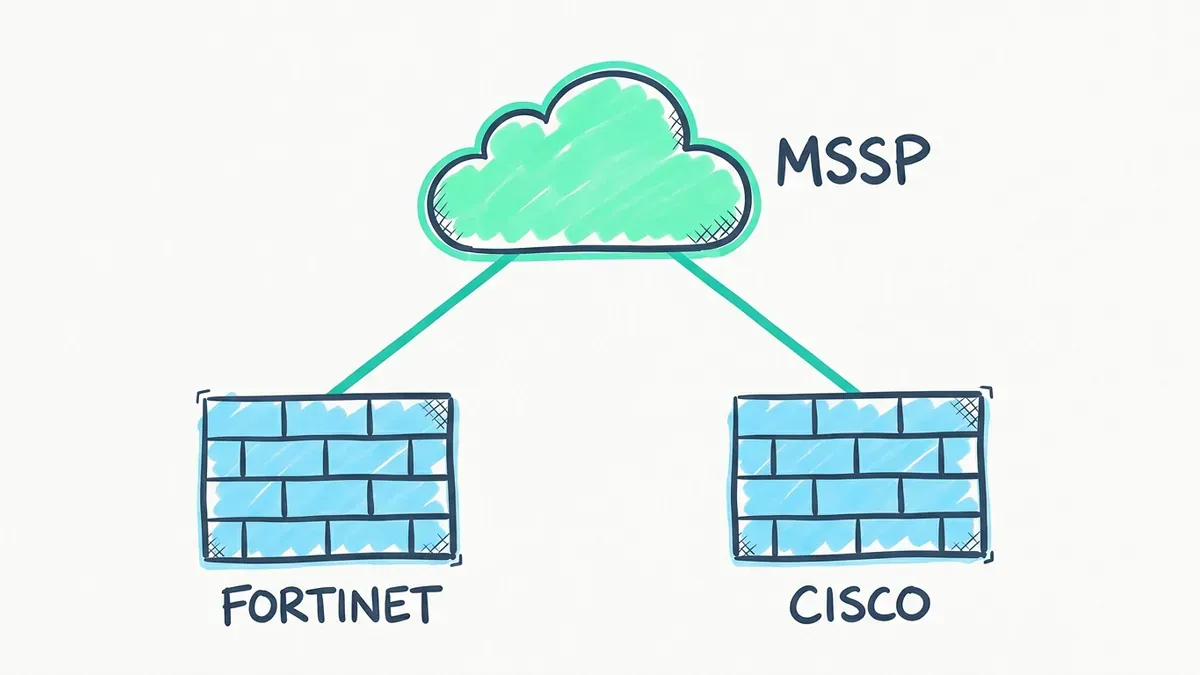
| Work at an MSSP | Both (NSE4 + CCNA) | MSSPs manage multi-vendor environments |
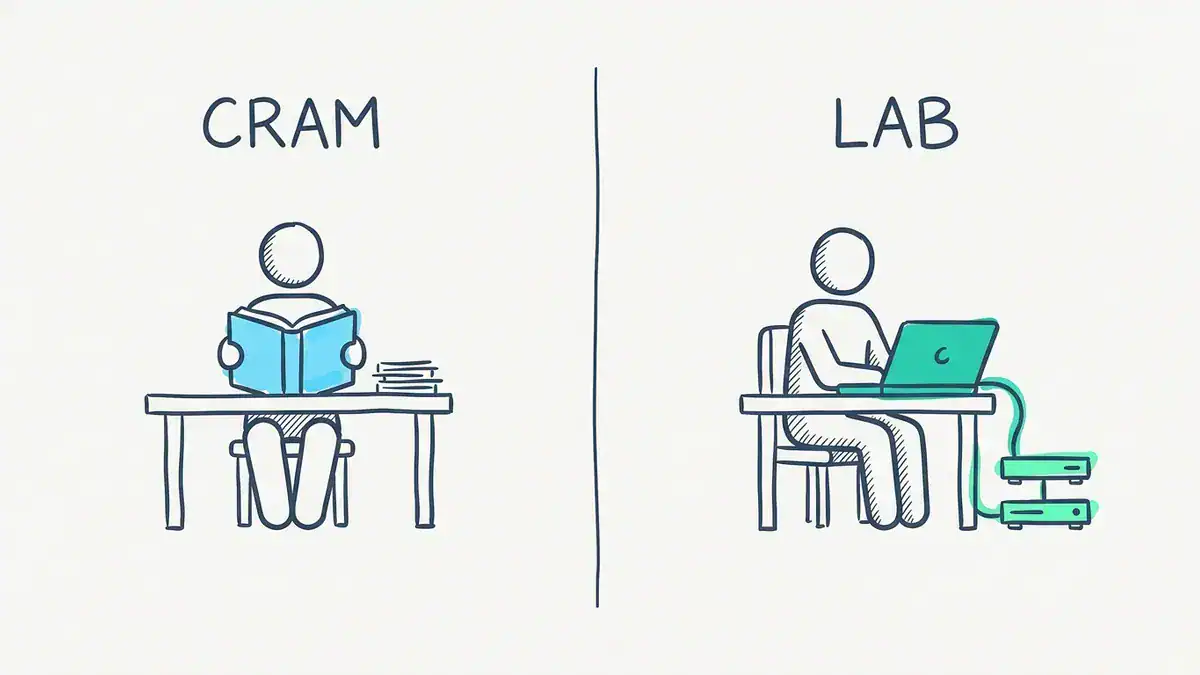
What hiring managers actually look at isn’t just the vendor name on your certification. They care about hands-on labs experience, real project work, and your ability to troubleshoot under pressure. Both certs prove you can do this, just in different contexts.
Having a cert alone won’t get you there. You need practical, hands-on reps to back it up, on real (or realistic virtual) equipment, not just exam-cram material.
Frequently Asked Questions
Is Fortinet NSE4 harder than Cisco CCNA?
Not exactly. The exam difficulty is different, not harder or easier. NSE4 tests deep product knowledge of FortiGate. CCNA covers broader security concepts. If you’ve worked with FortiGate, NSE4 feels easier. If you’ve studied networking fundamentals, CCNA is more natural. The difficulty depends on your background.
Can I get both Fortinet NSE4 and Cisco certs?
Absolutely. And it’s actually a smart move. Many senior engineers hold both. Start with whichever matches your current role, then add the other within 12-18 months.
Which cert has better job opportunities in 2026?
Cisco still has more total job listings globally. For firewall-specific roles, NSE4 is often preferred. For broader security roles, Cisco wins.
How long does it take to get NSE4 vs CCNA?
Most people report 2-3 months for NSE4 with proper hands-on lab practice, and 3-6 months for the CCNA. Structured, consistent study time and real lab reps, not just reading, are what actually move that timeline.
What is NSE 4 called now?
NSE 4. Fortinet used the name FCP (Fortinet Certified Professional) from October 2023, then retired the FCF, FCA, FCP, FCSS and FCX names on 2026-07-15 and brought back the NSE levels. If you held an active FCP, Fortinet converted it automatically with the same expiry date. The details are in our NSE certification changes guide.
Is the CCNA still worth it in 2026?
For the Cisco security path, yes. It’s the entry point to CCNP Security, and the exam is $300 and 120 minutes. Cisco is replacing v1.1 with v2.0, with the first test day reported as 2027-02-03, so check which version your study materials cover.
Bottom Line: Making Your Fortinet NSE4 vs Cisco Decision
There’s no one-size-fits-all answer. And honestly, that’s okay. Both certifications are valuable, respected, and lead to well-paying security careers.
If you need a quick certification to boost your current role with FortiGate firewalls, NSE4 is your fastest path. If you’re building a long-term career with the highest salary ceiling, the Cisco track, CCNA through CCNP and eventually CCIE Security, gives you the most room to grow.
The best approach? Don’t overthink it. Pick the one that matches where you are right now, get certified, and start building. You can always add the other certification later. The security job market is hot enough that either choice will move your career forward.
One thing both paths share: employers want security engineers who can operate SIEM and XDR tools, not just configure firewalls. Adding a SIEM tool like Wazuh to either certification path gives you the detection and monitoring skills employers ask for in security roles. The Wazuh SIEM Home Lab guide walks through installing and enrolling the agent with Docker.
Put it into practice
- FortiGate NSE4 Lab Workbook – FortiGate labs on a full EVE-NG topology, built for the NSE4 blueprint.
- CCNA Workbook – the Cisco foundation the security career path builds on.
- CCIE Security Workbook – for engineers targeting the top of the Cisco security track.
Related reading on SMEnode Labs
- What Is FortiGate? How Fortinet’s Firewall Works in 2026 – the fundamentals behind the NSE4 blueprint.
- How to Add FortiGate VM to EVE-NG: Setup Guide + NSE4 Lab Topology – build the exact lab this comparison assumes you’ll practice on.
- Home Lab Setup for Network Engineers: Build a CCNA Lab in a Weekend – the Cisco-side equivalent lab build.