The AWS Certified CloudOps Engineer – Associate (SOA-C03) is 65 questions in 130 minutes, costs $150, and you need 720 out of 1,000 to pass. Last checked 2026-11-05.
It’s a scenario-based exam, so you need to practise, not memorise.
Chasing a shortcut for the SOA-C03? Understandable. The exam is tough. But leaked question files are unreliable, they breach the AWS Certification Program Agreement, and AWS can invalidate your results or revoke your certification.
What actually works? Scenario-based practice questions that teach you the why behind each answer. That’s exactly what this guide gives you: a full study breakdown of all 5 exam domains, plus 12 real-style practice questions you can work through right now.
Let’s get into it.
What Is the AWS CloudOps Engineer Exam (SOA-C03)?
Quick answer: it’s the renamed and updated version of the old AWS SysOps Administrator exam.
AWS officially retired the SOA-C02 (SysOps Admin) on September 29, 2025, and launched the SOA-C03 as the AWS Certified CloudOps Engineer – Associate the very next day. Same exam code lineage. Same associate level. But a pretty big content refresh.
If you’ve been studying old SysOps materials, you’re not starting from zero. But you do need to fill some gaps. AWS lists the specific changes further down. To see where it fits among the other certs, check our AWS certification path guide.
Here’s what the exam looks like now:
| Detail | SOA-C03 Specs |
|---|---|
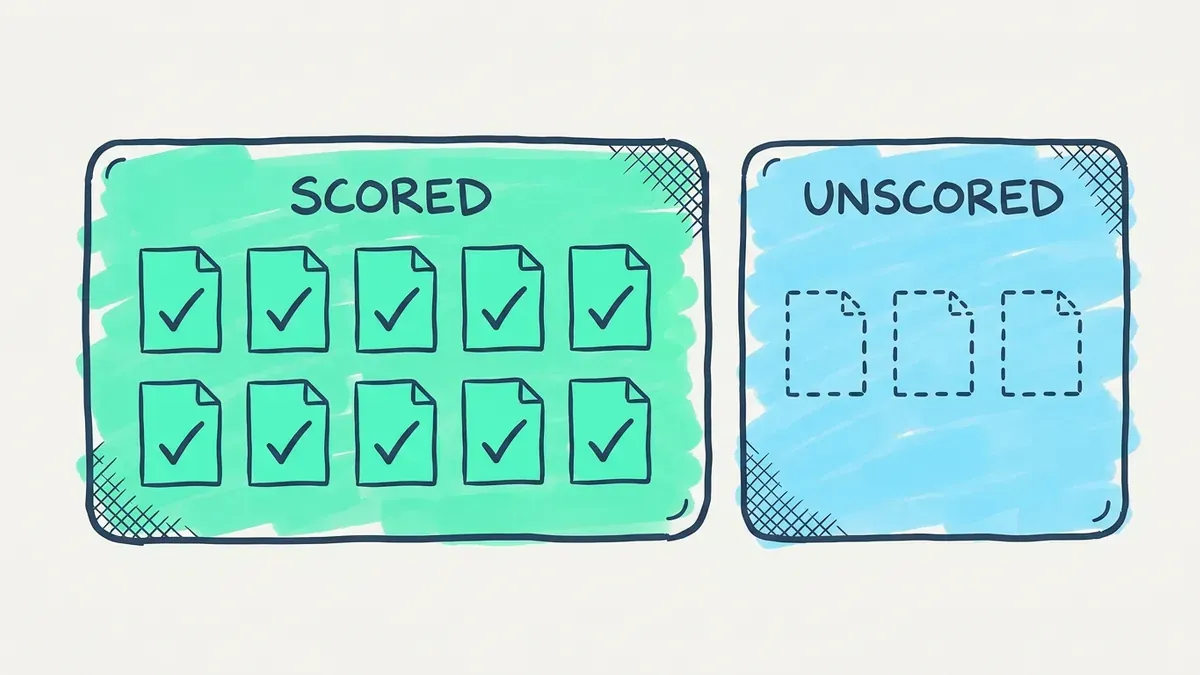
| Questions | 65 total (50 scored, 15 unscored pilot) |
| Duration | 130 minutes |
| Passing Score | 720 / 1,000 (scaled) |
| Cost | $150 USD plus any foreign exchange charges |
| Format | Multiple choice + multiple response |
| Delivery | Pearson VUE (test centre or online proctored) |
| Validity | 3 years |
| Languages | English, Japanese, Korean, Simplified Chinese (Korean and Simplified Chinese retire after 2026-11-19) |
| Prerequisites | None. AWS recommends about 1 year of AWS experience and 1 year in an operations role |
The scoring is compensatory. That means you don’t need to pass every domain individually. If you crush monitoring but struggle with networking, your strong areas can carry you through.
What changed in the AWS exam guide in 2026?
AWS has revised the SOA-C03 exam guide twice since launch. Version 1.1 (published 2026-06-01) added AI workloads to the monitoring skills, named Kiro and AWS DevOps Agent in the remediation and automation skills, and added Amazon Bedrock, AWS Health Dashboard and AWS Security Agent to the in-scope services. Version 1.2 was published 2026-10-29. AWS says revisions appear at least one month before they show up on the exam, so check the exam guide and its revisions page before you book.
What Replaced the AWS SysOps Administrator Exam? (SOA-C02 vs SOA-C03)
The biggest shift is the mindset. SOA-C02 was about traditional system administration. SOA-C03 is about automation-first, cloud-native operations. Think less “fix the server” and more “automate the fix so the server heals itself.”
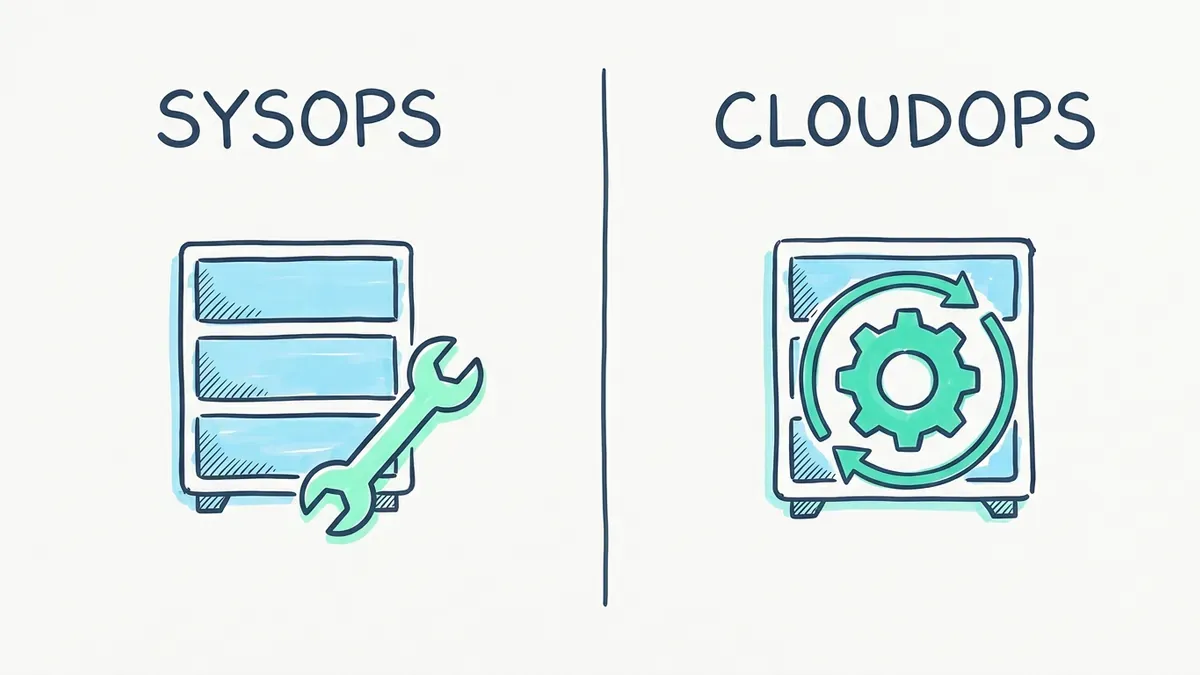
Here’s what AWS lists as new, removed or moved:
- Containers (ECR, ECS, EKS) are in the service list, and the CloudWatch agent now covers ECS and EKS
- Stacks managed with both CloudFormation and the AWS CDK, plus third-party tools such as Terraform and Git
- IAM Identity Center is named in the multi-account security skills
- Enforcing compliance requirements, such as Region and service choices
- CloudWatch network monitoring for troubleshooting
- VPNs moved from the security domain into networking
- S3 static website hosting was removed
- Multi-account and multi-region management gets heavier emphasis
- Cost optimisation is no longer a standalone domain, it’s woven into the others
The domain structure went from 6 domains down to 5. Not because content was removed. It was redistributed.
Do My Old SysOps Study Materials Still Work?
Mostly, yes. Four of the five content domains kept their names, and two of them (Security and Compliance at 16%, Networking and Content Delivery at 18%) kept their exact weightings too. If you studied for the AWS Certified SysOps Administrator, that work still counts.
What changed is where the weight sits. Monitoring went from 20% to 22%, Reliability jumped from 16% to 22%, and Deployment rose from 18% to 22%. The old Domain 6, Cost and Performance Optimization at 12%, was dissolved and folded into Task 1.3.
AWS lists the additions specifically: the CloudWatch agent for EC2, ECS and EKS metrics and logs; managing stacks with both CloudFormation and the AWS CDK; enforcing compliance requirements such as Region and service selections; and analysing CloudWatch network monitoring services. Only one thing was removed, S3 static website hosting, and VPNs moved from the security domain into networking.
One practical note on timing. The last day to sit the SOA-C02 was September 29, 2025, and the first day to sit the SOA-C03 was September 30, 2025. The old exam is gone, so there’s no option to take the version your old materials were written for.
If you’re coming from a DevOps background, you’ll find some overlap. But this exam focuses on operations, not pipeline design.
The 5 Exam Domains (and What You Actually Need to Know)
Every domain carries real weight. No filler topics here.
| Domain | Weight |
|---|---|
| 1. Monitoring, Logging, Analysis, Remediation & Performance Optimization | 22% |
| 2. Reliability and Business Continuity | 22% |
| 3. Deployment, Provisioning, and Automation | 22% |
| 4. Security and Compliance | 16% |
| 5. Networking and Content Delivery | 18% |
Domain 1: Monitoring, Logging, Analysis, Remediation & Performance Optimization (22%)
This is the biggest domain by scope, even though two others match it at 22%. It covers everything related to watching your infrastructure, figuring out what’s wrong, and fixing it.
Key services you must know cold:
- CloudWatch – metrics, alarms, dashboards, Logs Insights, cross-account monitoring
- CloudTrail – API activity logging, multi-region trails
- VPC Flow Logs – network traffic analysis
- AWS X-Ray – distributed tracing for applications
- Managed Prometheus – container metrics collection
- Managed Grafana – visualisation dashboards
- EventBridge – routing, enriching and delivering events, and troubleshooting rules
- Systems Manager Automation – runbooks that remediate issues
- EBS, EFS, FSx and S3 performance features – volume types, lifecycle policies, transfer options
- RDS Performance Insights and RDS Proxy – database performance
- Cost Explorer and Cost and Usage Reports – cloud financial management
What the exam tests: Can you pick the right monitoring tool for a given scenario? Can you set up alarms that actually catch problems before they become outages? Can you read a CloudTrail log and figure out who did what?
Task 1.3 is performance optimization. Expect questions on EBS volume types and metrics, S3 transfer and lifecycle strategies, shared storage choices (EFS and FSx), RDS Performance Insights and RDS Proxy, and EC2 placement groups. Since guide version 1.1, the monitoring skills also cover workloads such as serverless and AI.
Domain 2: Reliability and Business Continuity (22%)
This is about keeping things running when stuff breaks. And stuff always breaks.
You need to know:
- Multi-AZ and multi-Region architecture design
- Auto Scaling for compute environments, including EC2 and ECS
- Disaster recovery strategies (backup/restore, pilot light, warm standby, active-active)
- AWS Backup configuration and policies
- RDS failover behaviour, Aurora Serverless v2
- Route 53 health checks and failover routing
- Caching with CloudFront and ElastiCache
- Scaling managed databases (RDS, DynamoDB)
- Versioning and point-in-time restore for storage and databases
The exam loves questions like: “Your application needs 99.99% uptime. Which architecture meets this requirement at the lowest cost?” You need to know the trade-offs between DR strategies, not just the definitions.
Domain 3: Deployment, Provisioning, and Automation (22%)
The automation domain. This is where the “CloudOps” identity really shows up.
Must-know services:
- CloudFormation – template syntax, stack operations, drift detection, nested stacks
- CDK (new) – understanding constructs and how CDK generates CloudFormation
- Systems Manager – Run Command, Patch Manager, Session Manager, Parameter Store
- ECS/EKS deployment – know how ECS and EKS fit into deployments
- EC2 Image Builder – creating and managing AMIs and container images
- AWS RAM and CloudFormation StackSets – sharing and deploying across accounts and Regions
- EventBridge – event-driven automation
- CI/CD awareness – you won’t design pipelines, but you need to understand how deployments flow
AWS’s skill list says “use and manage third-party tools to automate resource deployment”, with Terraform and Git as the examples. Know what Terraform does and how it compares with CloudFormation.
If you’re also exploring the AWS Solutions Architect path, note that this domain overlaps with the architecture exam’s deployment section. But CloudOps goes deeper into the operational side of deployments.
Domain 4: Security and Compliance (16%)
The lightest domain by weight, but don’t skip it. Security questions tend to be tricky because they test nuance.
Key services:
- IAM – policies, roles, permission boundaries, cross-account access
- IAM Identity Center (new) – centralised access for multi-account
- IAM Access Analyzer and the IAM policy simulator – find external access and test policy changes
- AWS Organizations and Service Control Policies (SCPs)
- AWS Config – compliance rules and remediation
- Security Hub – centralised security findings
- Network Firewall – layer 3-7 traffic filtering
- KMS, ACM – encryption and certificate management
- GuardDuty, Inspector – threat detection
- Secrets Manager – storing secrets securely
- Trusted Advisor security checks – findings to remediate
- Config conformance packs – continuous compliance monitoring
The multi-account security model is a big deal on this exam. Expect questions about how Organizations, SCPs, and IAM Identity Center work together.
Domain 5: Networking and Content Delivery (18%)
Networking is the second-heaviest domain after the top three. And it’s the one most people underestimate.
You must understand:
- VPC design – subnets, route tables, NACLs, security groups
- VPC Peering vs Transit Gateway
- VPC Endpoints (Gateway and Interface) – huge exam topic
- Route 53 routing policies (simple, weighted, latency, failover, geolocation)
- CloudFront distributions and behaviours
- Global Accelerator – another way to distribute traffic
- Network protection services – WAF, Shield, Route 53 Resolver DNS Firewall, Network Firewall
- Troubleshooting with flow logs, ELB logs, WAF logs and CloudFront logs
- ALB vs NLB – when to use which
- Client VPN and Site-to-Site VPN (the hybrid connectivity services AWS lists)
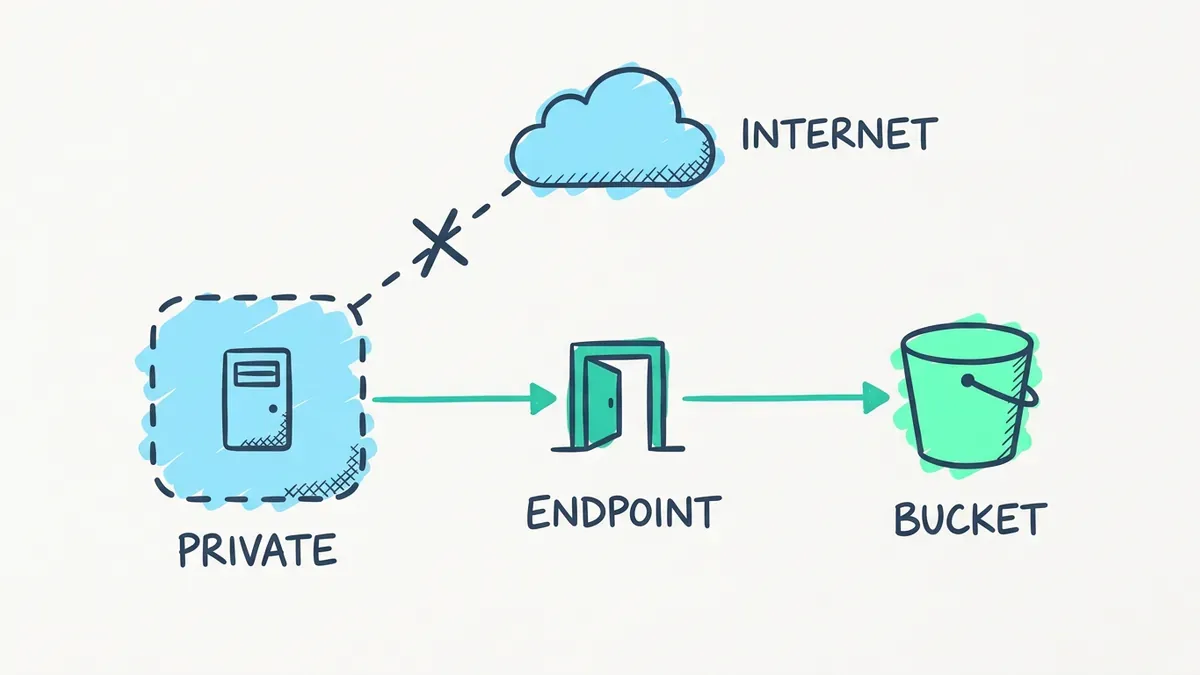
Pro tip: VPC endpoints come up on almost every practice set. Know the difference between Gateway endpoints (S3, DynamoDB) and Interface endpoints (everything else). Know which one costs money. Know which one needs a route table entry vs a DNS resolution.
AWS CloudOps Engineer Practice Questions (With Explanations)
Here’s where the real prep starts. These questions mirror the format and difficulty of the actual SOA-C03. Each one comes with an explanation so you understand the reasoning, not just the answer.
Domain 1: Monitoring & Performance
Question 1: Your organisation runs workloads across three AWS accounts. The operations team needs a single dashboard to view CloudWatch metrics from all accounts. What should you configure?
A) Create individual dashboards in each account and share URLs B) Set up cross-account CloudWatch observability with a monitoring account C) Export all metrics to an S3 bucket and use Athena for queries D) Install a third-party monitoring agent on all instances
Answer: B. Cross-account CloudWatch observability lets you designate a central monitoring account that can view metrics, logs, and alarms from linked source accounts. This is a native AWS feature designed exactly for multi-account operations. Option A doesn’t provide a unified view. Option C adds unnecessary complexity. Option D introduces external dependencies.
Question 2: An application team reports intermittent latency spikes in their microservices application. You need to identify which service in the call chain is causing the bottleneck. Which AWS service should you use?
A) CloudWatch Metrics B) CloudTrail C) AWS X-Ray D) VPC Flow Logs
Answer: C. X-Ray provides distributed tracing across microservices, showing the full request path and latency at each hop. CloudWatch Metrics shows aggregate data but can’t trace individual requests. CloudTrail logs API calls, not application performance. VPC Flow Logs show network traffic volume, not application-level latency.
Question 3: A database server uses a 500 GiB gp2 EBS volume and needs 6,000 IOPS sustained. The team wants the lowest-cost fix without detaching the volume or changing the instance. What should you do?
A) Increase the gp2 volume to 2,000 GiB B) Change the volume type to gp3 and provision 6,000 IOPS C) Change the volume type to io2 Block Express and provision 6,000 IOPS D) Add a second gp2 volume and stripe the two
Answer: B. gp3 includes a 3,000 IOPS baseline whatever the volume size, and you can provision more without adding storage. Elastic Volumes lets you change the volume type and IOPS without interrupting the instance, and gp3 costs about 20% less per GiB than gp2. Growing the gp2 volume to 2,000 GiB (A) would reach 6,000 IOPS at 3 IOPS per GiB, but you’d pay for four times the storage. io2 Block Express (C) costs more and is built for latency-sensitive workloads. Striping (D) adds complexity and still pays for gp2 storage. (Skill 1.3.2)
Domain 2: Reliability & Business Continuity
Question 4: A production RDS MySQL database needs to survive an entire Availability Zone failure with minimal data loss and automatic failover. What’s the most cost-effective solution?
A) Create read replicas in a different AZ B) Enable Multi-AZ deployment C) Set up cross-Region read replicas D) Take automated snapshots every 5 minutes
Answer: B. Multi-AZ deployment creates a synchronous standby replica in a different AZ with automatic failover. Read replicas (A) use asynchronous replication and don’t provide automatic failover, though they can be promoted manually. Cross-Region replicas (C) are overkill for AZ-level resilience and cost more. Snapshots (D) have an RPO equal to the snapshot interval, which means potential data loss.
Question 5: An Auto Scaling group runs behind an ALB. During a traffic spike, new instances launch but the ALB reports them as unhealthy for 3 minutes before they start receiving traffic. Users experience slow response times during this period. How do you fix this?
A) Increase the desired capacity to pre-provision instances B) Reduce the health check interval on the target group C) Add a warm pool to the Auto Scaling group D) Switch to a Network Load Balancer
Answer: C. A warm pool maintains pre-initialised instances in a stopped or running state, ready to serve traffic almost immediately when scaling events trigger. Pre-provisioning (A) wastes money during normal traffic. Reducing health check interval (B) might help slightly but doesn’t address the boot/initialisation time. NLB (D) doesn’t solve the instance readiness problem.
Domain 3: Deployment & Automation
Question 6: Your team manages infrastructure using CloudFormation. A stack update fails midway, and some resources are updated while others are not. What happens by default?
A) The stack remains in a partially updated state B) AWS rolls back all changes to the previous working state C) Only the failed resource is rolled back D) The stack is deleted automatically
Answer: B. CloudFormation’s default behaviour on update failure is to roll back the entire stack to its previous state. This is the “all or nothing” approach. The stack enters UPDATE_ROLLBACK_IN_PROGRESS status. You can disable this behaviour with the --disable-rollback flag, but the default is full rollback.
Question 7: You need to patch 200 EC2 instances across multiple accounts and Regions during a maintenance window. Which AWS service handles this most efficiently?
A) AWS CodeDeploy B) AWS Systems Manager Patch Manager C) Custom Lambda function with SSM Run Command D) Manual SSH access through a bastion host
Answer: B. Systems Manager Patch Manager is purpose-built for this. It supports multi-account and multi-Region patching through maintenance windows, applies patch baselines, and provides compliance reporting. CodeDeploy (A) is for application deployments, not OS patching. A custom Lambda (C) would work but requires significant development effort. Manual SSH (D) at scale is impractical and error-prone.
Question 8: Your team is debating between CloudFormation and CDK for a new project. A junior engineer asks what CDK actually generates under the hood. What’s the correct answer?
A) CDK generates Terraform configuration files B) CDK generates CloudFormation templates C) CDK deploys resources directly via API calls D) CDK generates AWS CLI scripts
Answer: B. CDK synthesises CloudFormation templates. When you run cdk synth, it produces a CloudFormation JSON/YAML template. When you run cdk deploy, it submits that template to CloudFormation. CDK is an abstraction layer on top of CloudFormation, not a replacement.
Domain 4: Security & Compliance
Question 9: Your organisation has 15 AWS accounts under AWS Organizations. You need to prevent any account from launching EC2 instances in the ap-southeast-1 Region. What’s the best approach?
A) Create an IAM policy in each account denying ec2:RunInstances in ap-southeast-1 B) Attach a Service Control Policy (SCP) to the OU denying ec2:RunInstances in ap-southeast-1 C) Remove the ap-southeast-1 Region from the account settings D) Create a Config rule to terminate instances launched in ap-southeast-1
Answer: B. SCPs provide centralised, preventive controls across all accounts in an OU. One policy, applied once, affects all 15 accounts. Individual IAM policies (A) require management in each account and can be overridden by admin users. Regions that AWS enables by default, such as ap-southeast-1, can’t be disabled for an account (C). Config rules (D) are detective, not preventive. They’d terminate instances after launch, not prevent them.
Question 10: The security team needs a list of IAM roles and S3 buckets in the organisation that can be accessed from outside the organisation. Which service provides this?
A) AWS Config B) IAM Access Analyzer C) Amazon Inspector D) AWS CloudTrail
Answer: B. IAM Access Analyzer analyses resource policies and reports resources shared with principals outside your zone of trust, such as your organisation. Config (A) records configuration changes and evaluates rules, but doesn’t report external access. Inspector (C) scans for software vulnerabilities. CloudTrail (D) logs API activity after the fact. (Skill 4.1.2)
Domain 5: Networking & Content Delivery
Question 11: An application in a private subnet needs to access an S3 bucket without traffic traversing the internet. The solution should not incur per-hour charges. What should you configure?
A) NAT Gateway with a route to S3 B) S3 Interface endpoint (AWS PrivateLink) C) S3 Gateway endpoint D) VPN connection to S3
Answer: C. Gateway endpoints for S3 (and DynamoDB) are free. They require a route table entry pointing to the endpoint, and traffic stays on the AWS backbone. Interface endpoints (B) use PrivateLink and charge per hour plus per GB, which means ongoing costs. NAT Gateway (A) also has hourly and data processing charges, and traffic technically leaves the VPC. VPN to S3 (D) isn’t a real architecture pattern.
This is one of those questions that comes up constantly. Know the difference between Gateway and Interface endpoints.
Question 12: Your application serves users globally. US users report fast load times, but European users experience 400ms+ latency. The application runs in us-east-1. What’s the quickest improvement?
A) Deploy the full application stack in eu-west-1 B) Place CloudFront in front of the application C) Change to a larger instance type D) Enable Transfer Acceleration on S3
Answer: B. CloudFront caches content at edge locations worldwide, reducing latency for users far from the origin. This is the fastest and most cost-effective fix. Full multi-Region deployment (A) solves the problem but is expensive and complex for a “quickest improvement” question. Larger instances (C) won’t help with network latency. Transfer Acceleration (D) is for S3 uploads, not application delivery.
Study Plan: How to Prepare for the AWS CloudOps Engineer Exam
Studying for the SOA-C03 without a plan is like driving without a map. You’ll move, but probably in circles. Here’s a structured approach based on what works.
Phase 1: Foundation (Weeks 1-2)
Goal: Understand all 5 domains at a conceptual level.
- Read the official AWS exam guide cover to cover
- Check AWS’s own prep: the Exam Prep Plan on Skill Builder, plus the Official Practice Question Set and Official Practice Exam that AWS’s exam page mentions
- Map each domain to the AWS services it covers
- If you’re weak on AWS fundamentals, build your base with foundational cloud concepts before diving into CloudOps specifics
At this stage, don’t worry about memorising. Just build a mental model of what the exam covers.
Phase 2: Deep Dive (Weeks 3-6)
Goal: Get hands-on with every key service.
Prioritise by domain weight (the hours are our estimate):
| Priority | Domain | Weight | Hours |
|---|---|---|---|
| 1 | Monitoring, Logging, Remediation | 22% | 15-20 |
| 2 | Reliability & Business Continuity | 22% | 15-20 |
| 3 | Deployment & Automation | 22% | 15-20 |
| 4 | Networking & Content Delivery | 18% | 12-15 |
| 5 | Security & Compliance | 16% | 10-12 |
For each domain:
- Read the AWS documentation for each service
- Build it in a lab environment (free tier where possible)
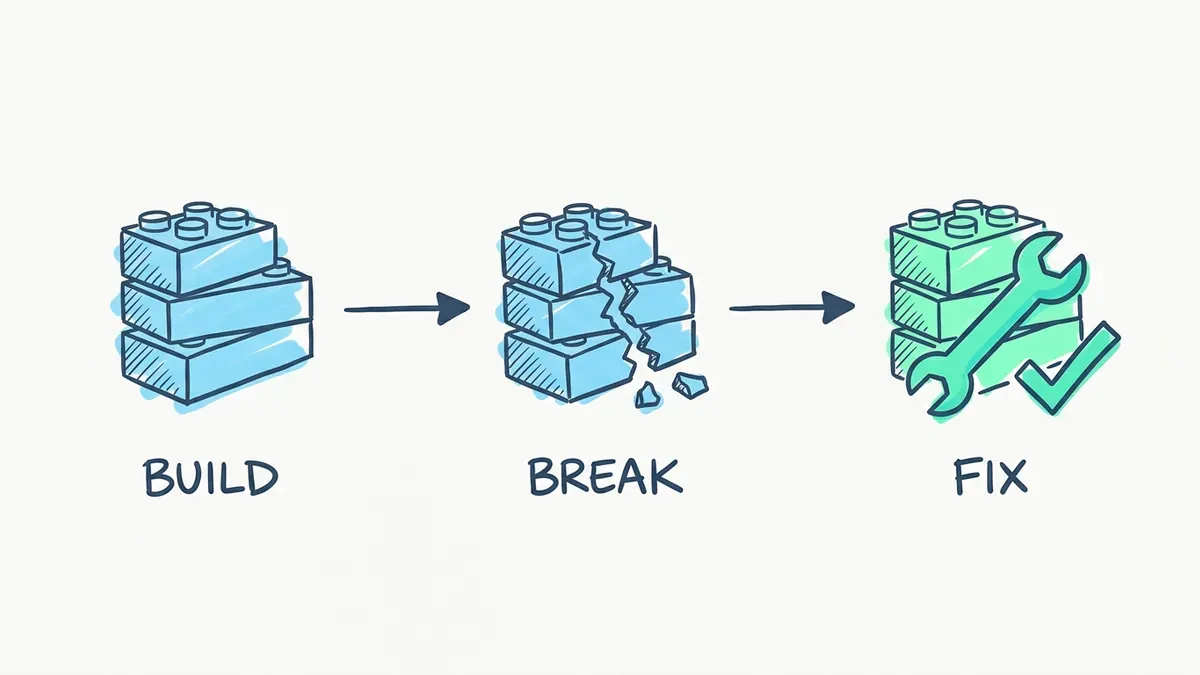
- Break it on purpose and troubleshoot
- Answer practice questions and review explanations
That third step matters more than you think. The exam tests troubleshooting skills. If you’ve never seen a CloudFormation stack fail, you won’t know how rollback works in practice.
Phase 3: Practice & Review (Weeks 7-8)
Goal: Test yourself under exam conditions.
- Complete full-length practice exams (65 questions, 130 minutes)
- Score each domain separately to find weak spots
- Review every wrong answer and understand why you got it wrong
- Re-study weak domains with targeted practice
Target score on practice exams: 80%+ consistently before booking your real exam. The passing score is 720/1000 (roughly 72%), but you want a buffer for exam-day nerves.
Hands-On Lab Recommendations
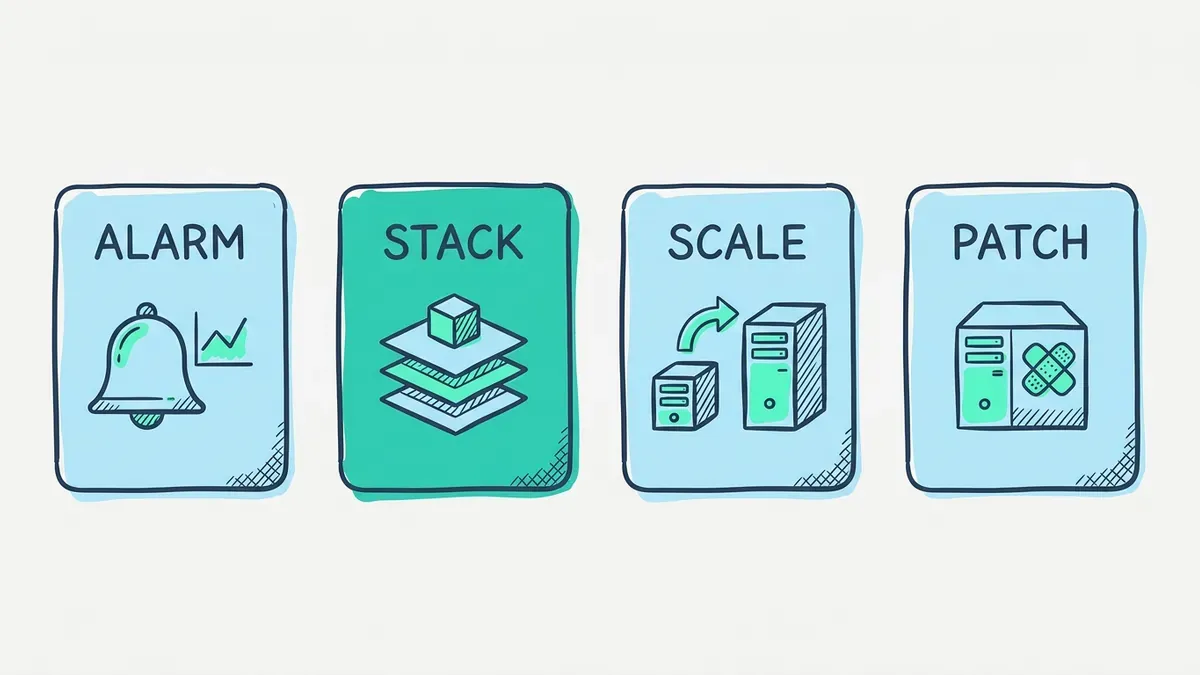
The exam is scenario-heavy. You can’t pass by reading alone. Build these in your AWS account:
- CloudWatch dashboard with custom metrics and cross-account monitoring
- CloudFormation stack with nested stacks, handle a deliberate update failure
- Auto Scaling group with warm pool behind an ALB
- VPC with Gateway and Interface endpoints, access S3 privately
- Multi-account setup using Organizations with SCPs
- ECS Fargate service with task definitions and service auto-scaling
- Systems Manager Patch Manager baseline and maintenance window
Why Brain Dumps Don’t Work (and What to Do Instead)
Let’s talk about this directly. Plenty of people go looking for memorised exam questions. Here’s why that backfires.
Problem 1: You can’t tell which questions count. Every SOA-C03 exam carries 15 unscored questions that AWS is testing for future use, and they aren’t marked. Memorised lists don’t tell you which is which, and the scored questions are scenario-based.
Problem 2: You don’t learn the reasoning. Even if a dump answer is correct, you won’t understand why. The exam tests your ability to apply concepts to new scenarios. Memorised answers don’t transfer.
Problem 3: It violates the AWS Certification Program Agreement. AWS’s certification policies list invalidating your results, revoking your certifications, requiring retakes, restricting future exams and suspending your participation. AWS says its forensic analysis runs continuously, so it can revoke a certification even after it’s issued. The Certification Program Agreement has the full terms.
Problem 4: You’ll struggle in the actual job. The CloudOps Engineer role pays well above average because employers expect you to actually solve problems. A certification you memorised through won’t survive your first production incident.
What works instead:
- Scenario-based practice questions (like the ones above)
- Hands-on lab practice in a real AWS environment
- AWS documentation deep dives for services you don’t fully understand
- Structured, repeatable study time with real lab reps, not just reading
AWS CloudOps Engineer Salary: Is the Certification Worth It?
Short answer: it helps, but pay moves more with title and location than with the certificate.
We couldn’t find a reliable pay figure for the CloudOps Engineer title itself. Salary.com lists an average of $121,843 for Cloud SysOps Administrator roles in the United States as of 2026-11-01, with the middle half of salaries between $113,656 and $131,260. Title, employer and location move the number a lot, so treat it as a starting point.
It stacks well with other credentials. Pairing the CloudOps cert with an AWS Solutions Architect credential makes you especially competitive for senior cloud roles. See our AWS Solutions Architect salary guide for what that path pays.
Quick-Reference Cheat Sheet: Services by Domain
Use this as a review checklist. If you can’t explain what each service does and when to use it, that’s your study signal.
Domain 1, Monitoring: CloudWatch (Metrics, Alarms, Logs, Logs Insights, Dashboards), CloudTrail, VPC Flow Logs, X-Ray, Managed Prometheus, Managed Grafana, EventBridge, Systems Manager Automation, EBS and RDS performance tools, Cost Explorer, Cost and Usage Reports
Domain 2, Reliability: Auto Scaling (EC2, ECS), AWS Backup, Multi-AZ RDS, Aurora Serverless v2, Route 53 Health Checks, Elastic Load Balancing
Domain 3, Deployment: CloudFormation, CDK, Systems Manager (Run Command, Patch Manager, Session Manager, Parameter Store), ECS/EKS/ECR, EC2 Image Builder, EventBridge, AWS RAM, StackSets
Domain 4, Security: IAM (Policies, Roles, Permission Boundaries), IAM Identity Center, IAM Access Analyzer, Organizations + SCPs, Secrets Manager, Config, Security Hub, Network Firewall, KMS, ACM, GuardDuty, Inspector
Domain 5, Networking: VPC (Subnets, Route Tables, NACLs, Security Groups), VPC Endpoints (Gateway, Interface), Route 53, CloudFront, ALB/NLB, Transit Gateway, VPC Peering, Client VPN, Site-to-Site VPN, Global Accelerator, WAF, Shield
What replaced the AWS SysOps Administrator exam?
The AWS Certified CloudOps Engineer – Associate (SOA-C03) replaced the SysOps Administrator exam (SOA-C02) on September 30, 2025. The new exam covers the same operations focus but adds containers, CDK, IAM Identity Center, and multi-account management.
How many questions are on the AWS CloudOps Engineer exam?
The SOA-C03 exam has 65 total questions, but only 50 are scored. The remaining 15 are unscored pilot questions that AWS uses to test future exam content. You get 130 minutes to complete the exam.
What score do you need to pass the AWS CloudOps exam?
You need a scaled score of 720 out of 1,000 to pass. The exam uses compensatory scoring, meaning you don’t need to pass each domain individually. Strong performance in one area can offset weaker performance in another.
Are AWS CloudOps exam dumps worth using?
Brain dumps with memorised answers are risky and unreliable. Using them can breach the AWS Certification Program Agreement, and AWS can invalidate your results or revoke your certification. Practice questions that explain the reasoning behind answers are far more effective for actual exam preparation.
How much does an AWS CloudOps Engineer earn?
We couldn’t find a reliable figure for the CloudOps Engineer title. Salary.com lists an average of $121,843 for Cloud SysOps Administrator roles in the United States (2026-11-01).
Do I need to retake the exam if I hold the SysOps Administrator certification?
No. AWS says existing SysOps Administrator certifications stay valid for three years from the date earned, and holders don’t have to take the new exam. The CloudOps Engineer name applies only to people who pass SOA-C03.
Did AWS change the SOA-C03 exam guide after launch?
Yes. Version 1.1 was published 2026-06-01 and version 1.2 on 2026-10-29. AWS publishes revisions at least one month before they appear on the exam. Check the guide’s revisions page before you book.
Do I need experience before taking SOA-C03?
AWS lists no prerequisites. It recommends about one year of AWS experience and one year in an operations role, and suggests Cloud Practitioner first if you have no IT work experience.
Ready to Start Practising?
You’ve seen 12 practice questions above, one full domain’s worth per section, in the exact scenario-based format the real SOA-C03 uses. Work through them again without looking at the answers first, then check your reasoning against the explanations.
That’s the kind of practice that actually prepares you for the exam. Not memorised dumps that put your certification at risk, but real scenario training that builds the problem-solving skills CloudOps Engineers need every day.