It’s 50 CCNA-level interview questions with short, say-it-out-loud answers. OSI model, subnetting, VLANs and trunking, STP, DHCP and DNS, NAT and PAT, OSPF and BGP, ACLs, HSRP, QoS, and the troubleshooting questions that come up in every first-round screen. One question per block, one tight answer under it. Built for people walking into a junior network engineer or NOC interview in the next two weeks.
Yes, this CCNA interview questions guide is a free download. Drop your email below and the PDF lands in your inbox. No payment.
What this PDF is
It’s 50 CCNA-level interview questions with short, say-it-out-loud answers. OSI model, subnetting, VLANs and trunking, STP, DHCP and DNS, NAT and PAT, OSPF and BGP, ACLs, HSRP, QoS, and the troubleshooting questions that come up in every first-round screen. One question per block, one tight answer under it. Built for people walking into a junior network engineer or NOC interview in the next two weeks.
Passing the CCNA and passing the interview aren’t the same skill. The exam gives you four options. The interview gives you a blank room and 30 seconds to explain what a trunk port does without waffling. Most candidates know the answer and still fumble the delivery.
This fixes the delivery. Every answer is one or two sentences, phrased the way you’d say it to a hiring manager. Read it on the train. Cover the answers and quiz yourself. It’s a cheat sheet, not a textbook.
What’s inside
- OSI model and device roles – the seven layers, plus hub vs switch vs router explained by the layer each one works at and how each handles traffic
- Addressing and subnetting – MAC addresses, subnet masks, what subnetting actually solves, VLSM, and why 127.0.0.1 exists
- VLANs and switching – VLANs, access vs trunk ports, VLAN trunks, VTP, STP and loop prevention, EtherChannel, broadcast vs collision domains, half vs full duplex
- Routing – default gateway, routing tables, static vs dynamic routing, OSPF and the SPF algorithm, BGP and autonomous systems, default routes, why routing protocols exist
- IP services – DHCP, relay agents, lease renewal, DNS and DNS caching, static vs dynamic addressing, NAT, PAT (NAT overload), and NAT64 for IPv6-to-IPv4
- Security and redundancy – ACLs, firewalls, VPNs, MAC flooding attacks and port security, proxy servers, QoS priority treatment, HSRP active-standby, CDP
- Troubleshooting – TCP vs UDP, ARP, ICMP, what ping actually sends, and a repeatable way to walk an interviewer through a connectivity fault
Every answer is short on purpose. If an interviewer wants depth, they’ll ask a follow-up. Leading with a two-sentence answer beats a two-minute ramble.
Who it’s for
- CCNA candidates with an interview booked who need spoken answers, not more practice questions
- Career switchers moving into networking from help desk or desktop support
- NOC and junior network engineer applicants prepping for a first-round technical screen
- Students revising before the exam, since these are the same fundamentals 200-301 tests
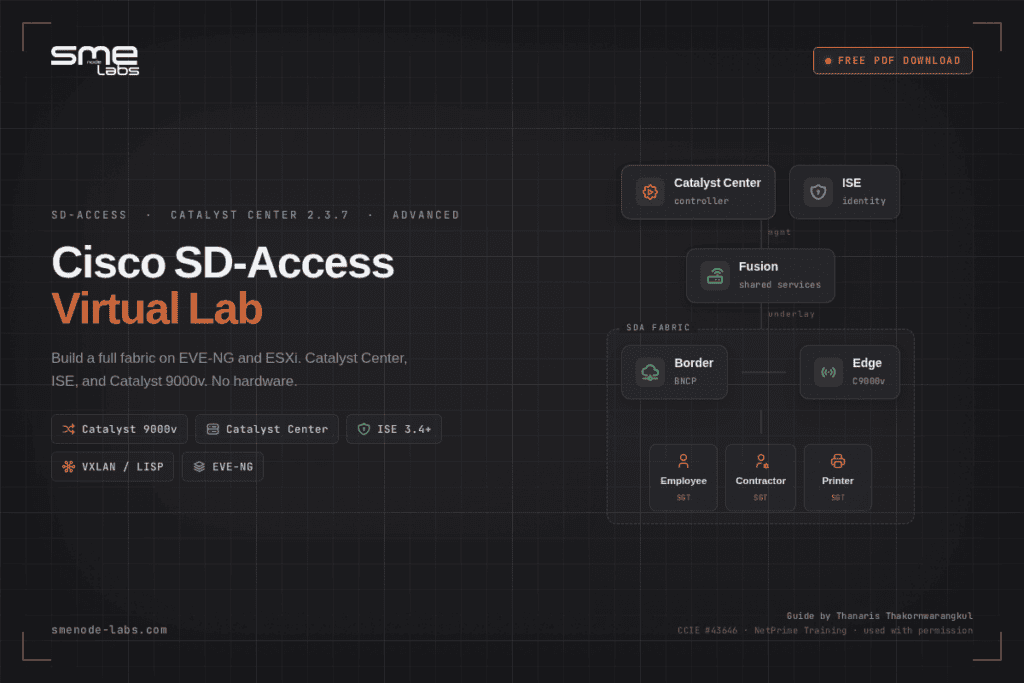
This one’s for beginners and early-career engineers. If you’re already running fabrics and BGP policy, our free Cisco SD-Access virtual lab PDF is a better fit.